

MAX250 Datasheet – Isolated RS-232 Driver/Receiver
+5V Powered Isolated RS-232 Drivers/Receivers
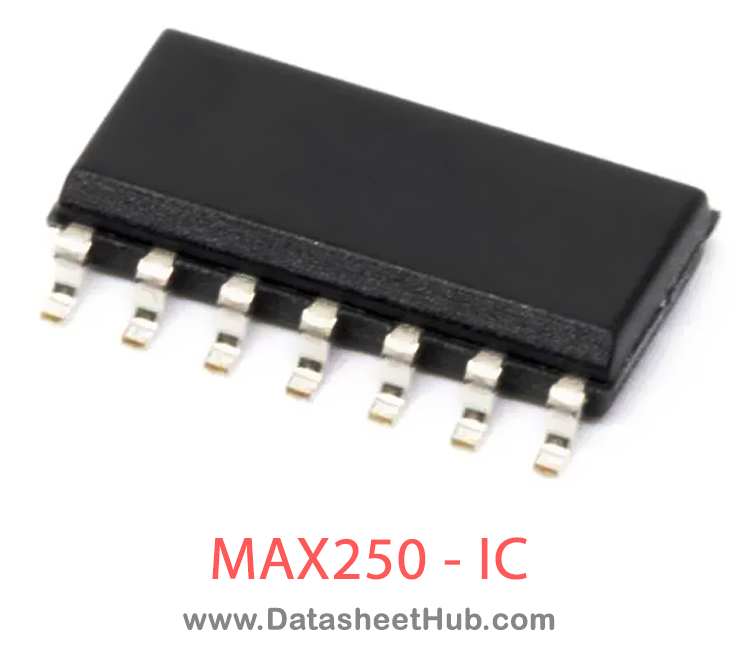
MAX250 overview
An RS-232 driver/receiver, often referred to as an RS-232 transceiver, is a device used to convert and interface between serial data signals conforming to the RS-232 standard and the logic level signals used by digital electronic devices. RS-232 is a widely used serial communication standard that defines the electrical and functional characteristics of serial communication between devices.
The RS-232 driver/receiver performs two primary functions:
Driver Function: The driver component of the transceiver generates the electrical voltage levels required for transmitting RS-232 signals. It converts the logic level signals from the transmitting device into the corresponding RS-232 voltage levels (+12V to -12V) suitable for long-range serial communication.
Receiver Function: The receiver component of the transceiver detects and interprets the RS-232 voltage levels received from the communication line. It converts the RS-232 signals back into logic level signals for the receiving device to process.
Datasheet
MAX250 features
- Analog Signal Routing: The IC can switch analog signals between the selected input and output channels, enabling signal multiplexing or demultiplexing in various applications.
- Low Power Consumption: The MAX250 is designed for low-power operation, making it suitable for battery-powered devices or energy-efficient systems.
- Wide Supply Voltage Range: It can operate with a wide supply voltage range, typically from 2.7V to 10V, providing flexibility in different voltage environments.
- Fast Switching Time: The MAX250 has a fast switching time, allowing for quick and efficient signal routing between channels.
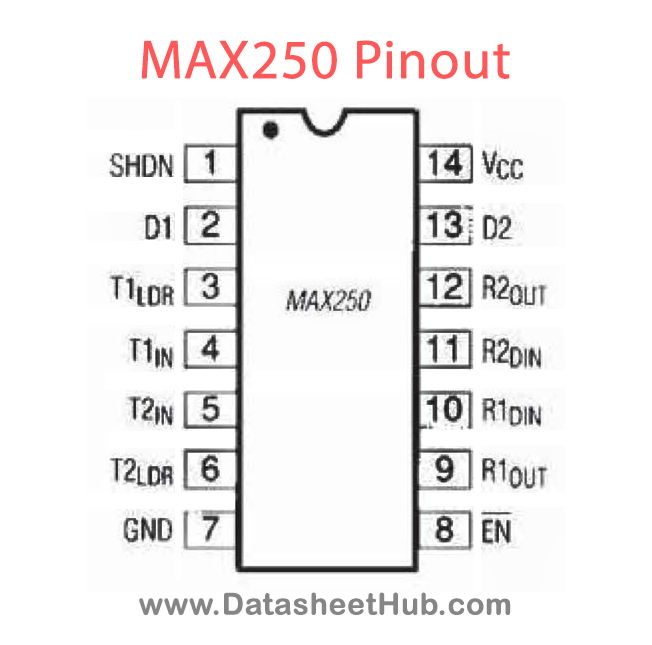
MAX250 pinout
MAX250 applications
- High Noise Data Communication
- Industrial Communication
- Data Link To Analog Circuits
- Bridge Ground Differentials
Comments 0
Leave a comment