
QTR-8A overview
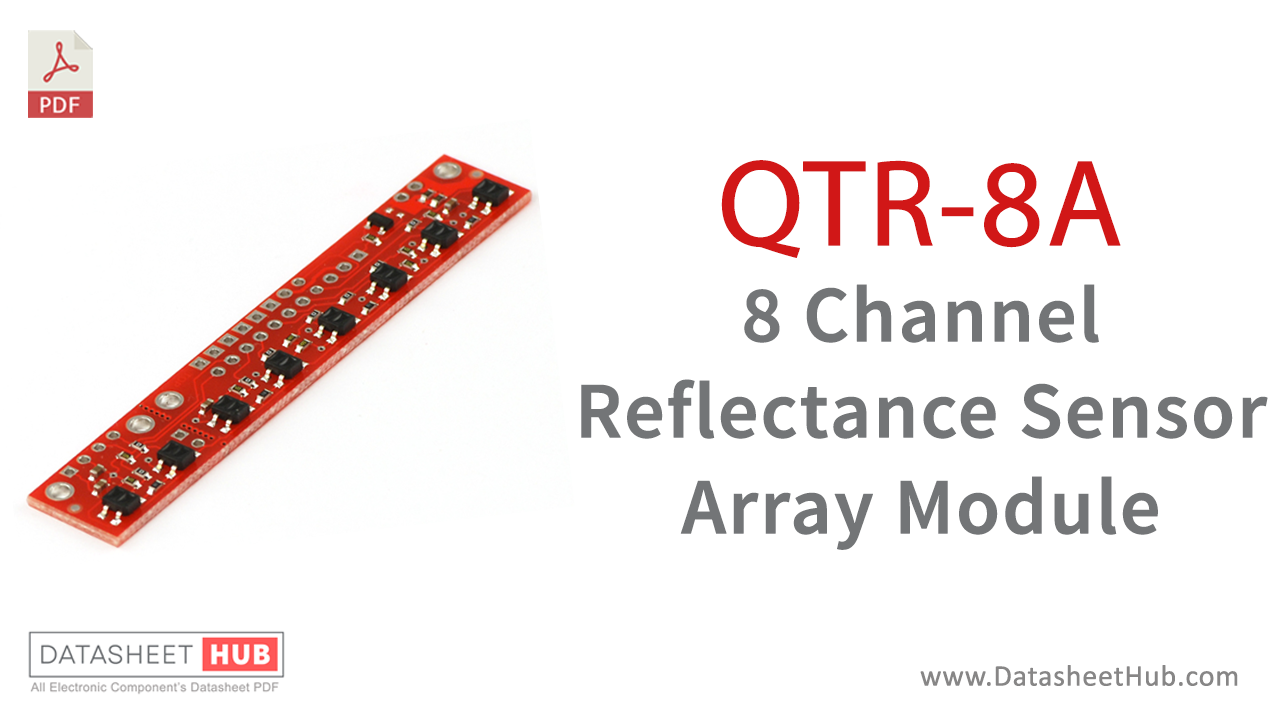
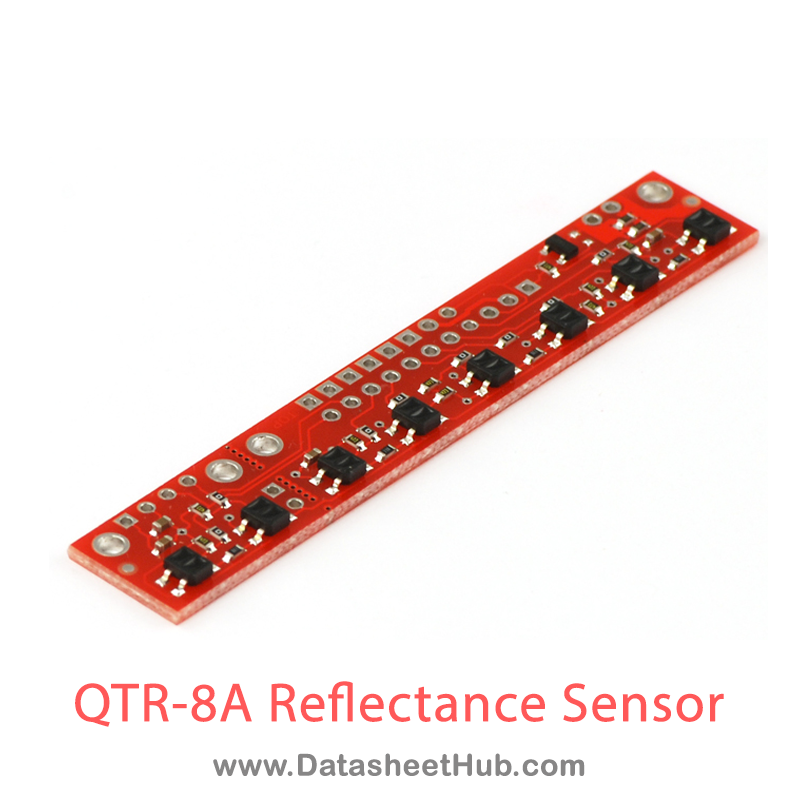
The QTR-8A reflectance sensor array is intended as a line sensor, but it can be used as a general-purpose proximity or reflectance sensor. The array module is a convenient carrier for eight IR emitter and receiver (phototransistor) pairs evenly spaced at intervals of 0.375″ (9.525mm). Each phototransistor is connected to a pull-up resistor to form a voltage divider that produces an analog voltage output between 0V and VIN (which is typically 5V) as a function of the reflected IR. The lower output voltage is an indication of greater reflection
Key specifications
Dimensions
2.95″ x 0.5″ x 0.125″ (without header pins installed)
Operating voltage
3.3-5.0V
Supply current
100mA
Output format
8 digital I/O-compatible signals that can be read as a timed high pulse
Optimal sensing distance
0.125″ (3mm)
Maximum recommended sensing distance
0.375″ (9.5mm)
Weight without header pins
0.11oz (3.09g)
QTR-8A features
- No analog-to-digital converter (ADC) is required
- Improved sensitivity over voltage-divider analog output
- Parallel reading of multiple sensors is possible with most microcontrollers
- Parallel reading allows optimized use of LED power to enable the option
- Operating voltage: 3.3-5.0 V
- Supply current: 100 mA
- Output format: 8 digital I/O-compatible signals that can be read as a timed high pulse
- Optimal sensing distance: 0.125" (3 mm)
- Maximum recommended sensing distance: 0.375" (9.5 mm)
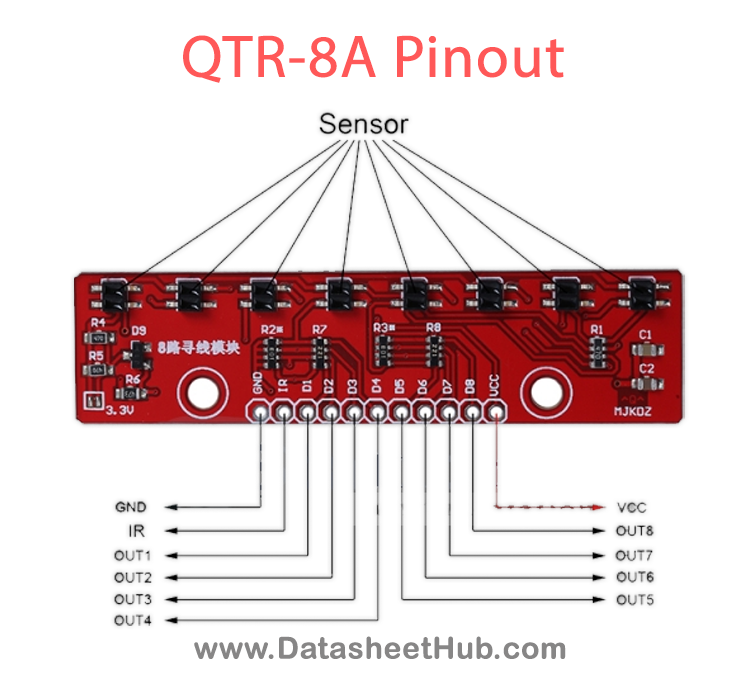
QTR-8A pinout
QTR-8A applications
- Line following robots: Detects lines or tracks for navigation and path following.
- Obstacle detection: Identifies obstacles or objects in front of the sensor array.
- Edge detection: Detects the edges of objects or surfaces for positioning or proximity sensing.
- Surface quality inspection: Measures reflectance to assess the quality or condition of surfaces.
- Material identification: Differentiates between materials based on their reflectance properties.
More about QTR-8A
Datasheet
Download the Datasheet of QTR-8A reflectance sensor from the link given below.
Comments 0
Leave a comment