

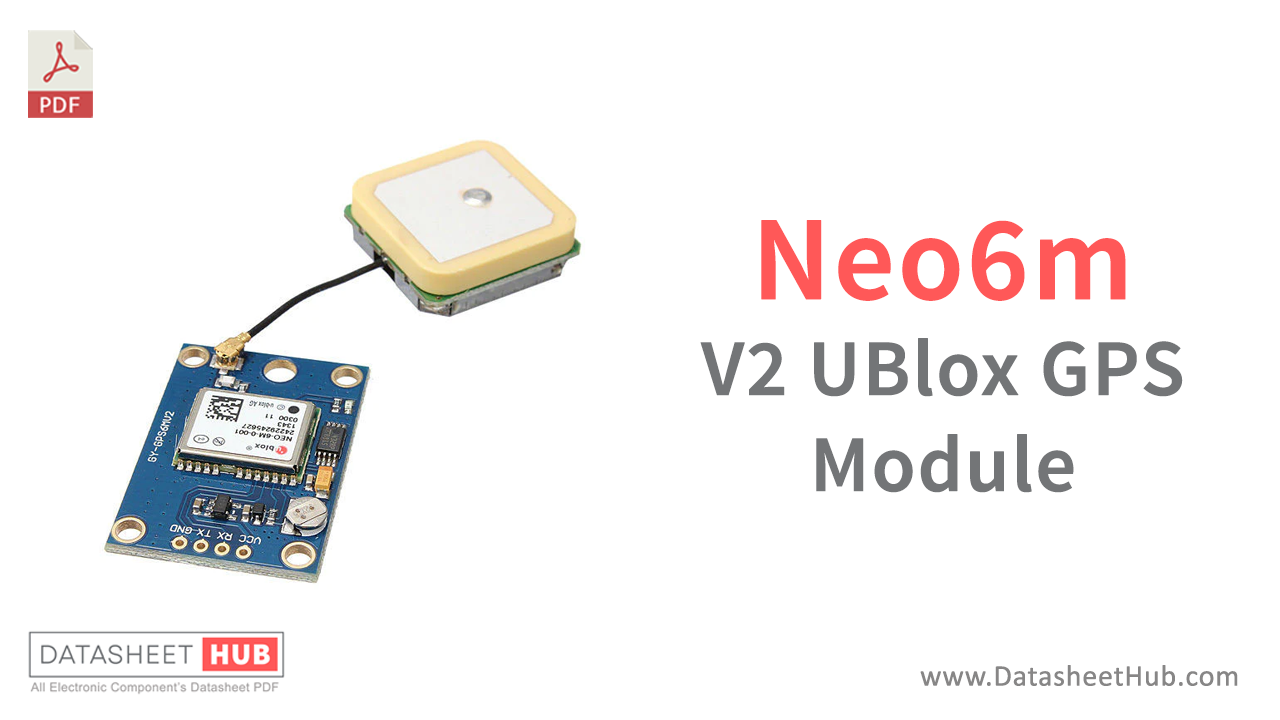
Neo6m overview
The Neo6m is a V2 UBlox GPS Module made by u-blox. Main ratings: Supply Voltage 3.3 V; Operating temperature range -40 TO 85°CUART TTL socket; Sense Indoor GPS -162 dBm tracking sensitivity. This page brings together the Neo6m pinout and key specifications, with the full datasheet PDF to preview below or download.
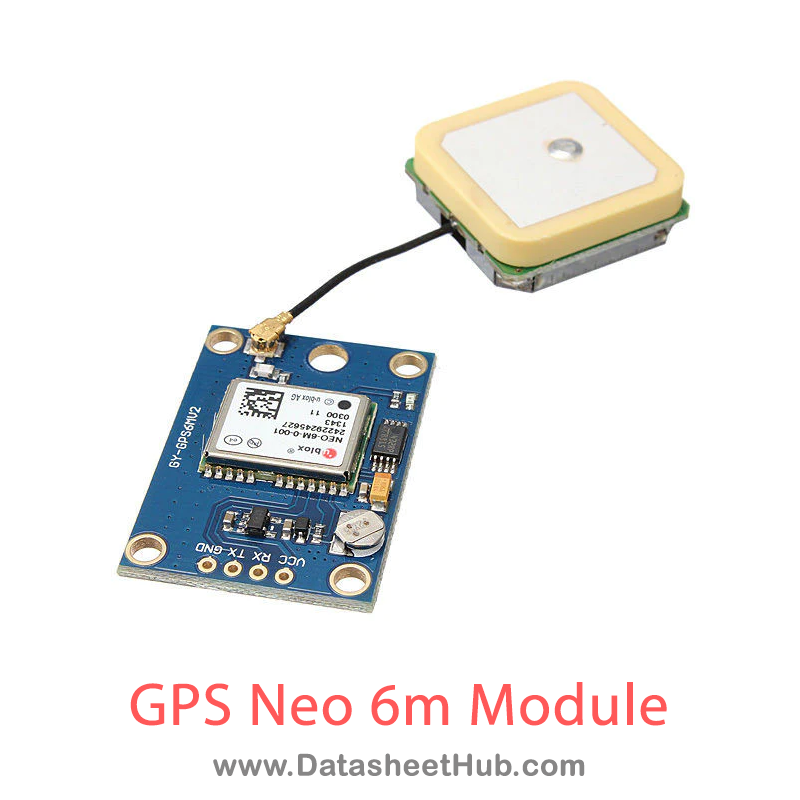
This is a complete GPS module that is based on the Ublox NEO-6M. This unit uses the latest technology from Ublox to give the best possible positioning information and includes a larger built-in 25 x 25mm active GPS antenna with a UART TTL socket. A battery is also included so that you can obtain a GPS lock faster. This is an updated GPS module that can be used with ardupilot mega v2. This GPS module gives the best possible position information, allowing for better performance with your Ardupilot or other Multirotor control platform.
The Ublox NEO-6M GPS engine on this board is a quite good one, with the high precision binary output. It has also high sensitivity for indoor applications. UBLOX NEO-6M GPS Module has a battery for power backup and EEPROM for storing configuration settings. The antenna is connected to the module through a full cable which allows for flexibility in mounting the GPS such that the antenna will always see the sky for best performance. This makes it powerful to use with cars and other mobile applications.
The Ublox GPS module has serial TTL output, it has four pins: TX, RX, VCC, and GND. You can download the u-center software for configuring the GPS and changing the settings and much more. It is really good software (see link below).
Key specifications
Datasheet
Neo6m features
- 5Hz position update rate
- EEPROM to save configuration settings
- Rechargeable battery for Backup
- The cold start time of 38 s and the Hot start time of 1 s
- Configurable from 4800 Baud to 115200 Baud rates. (default 9600)
- Support SBAS (WAAS, EGNOS, MSAS, GAGAN)
- Separated 18X18mm GPS antenna
Neo6m pinout

| Name | Description |
|---|---|
| VCC | Positive power pin |
| RX | UART receive pin |
| TX | UART transmit pin |
| GND | Ground |
Neo6m applications
- Time synchronization for networked devices and systems.
- Location-based services and applications for mobile devices.
- Weather monitoring and forecasting systems.
- Scientific research and data collection requiring precise location information.
- IoT (Internet of Things) applications for geolocation and tracking.
- Emergency response systems for locating and assisting individuals in distress.
- Surveying and construction applications requiring accurate positioning.
- Fleet management systems for tracking and optimizing vehicle routes.
- Geofencing applications for monitoring and controlling movement within specific areas.
Comments 0
Leave a comment